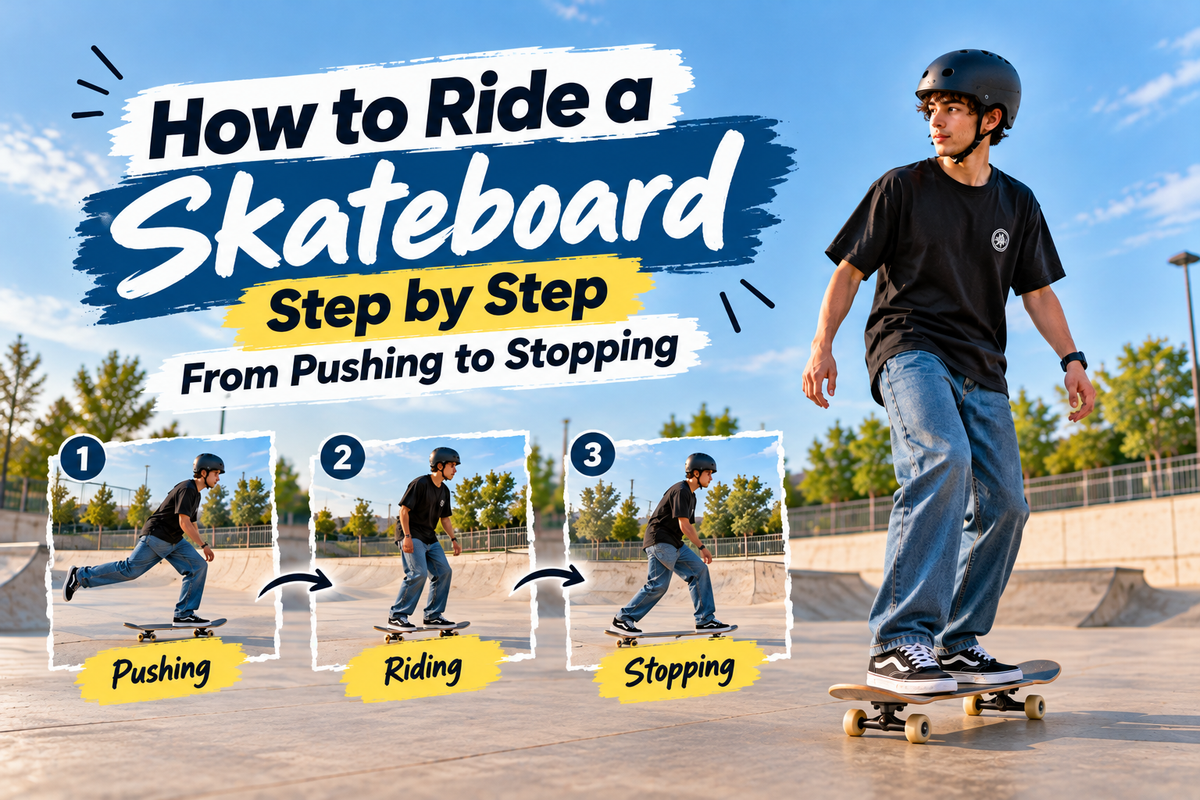
Nobody looks cool on their first day on a skateboard. Not the beginner in the parking lot, and not the skater at the park landing kickflips like it's nothing. Every single rider started the same way: wobbling, arms stretched out, hoping the board wouldn't shoot off on its own.
Here's the good part. Riding a skateboard isn't actually that hard. The body just needs some time to understand what's happening underneath it. A few honest sessions and things start to click. This guide covers everything from the very first push to stopping safely, plus the gear that matters, the mistakes to avoid, and the best places in India to skate once the basics are sorted.
Start With the Right Board
A lot of new skaters give up in the first week, and most of the time it isn't their fault. They pick up a cheap plastic board from a toy shop; it barely rolls, it feels shaky, and suddenly skating seems impossible. Boards like that usually come with weak trucks and poor bearings, so they fight the rider every step of the way.
A proper skateboard for beginners has a layered maple deck, strong trucks, and smooth bearings. That really is the whole secret. Skate Supply India suggests beginner-friendly boards like the Piston series for first-timers because they're stable, forgiving, and easy to balance on.
Riders who already have some confidence and want to start learning tricks can look at the Hearty skateboards range. These pro completes pop higher, respond faster, and hold up well to the knocks that come with learning. Popular picks include the CAT PRO 8.0 and the Sonic Groove Pro. The complete lineup sits in the skateboards collection.
Is There a Separate Skateboard for Adults?
Not really. Boards are chosen by body size, not age. Standard boards suit riders from around 8 years old right up to grown adults and comfortably carry roughly 95 to 100 kg. So a skateboard for adults can be the exact same setup a teenager rides. What changes is the width. Riders with bigger feet usually feel more comfortable on wider decks, and the size guide explains it clearly.
Choosing Kids Skateboards
For parents, the question is usually simple: will the child be able to control it? The kids collection makes that easier. It includes compact 22-inch Piston penny boards, which are light and easy for small riders to carry and steer, along with full-size complete boards that older kids can grow into. Good kids skateboards should feel stable first and fancy second.
Cruisers and Longboards for Smooth Rides
Not everyone wants to learn tricks. Some people just want to roll to the nearby market or glide along a seafront in the evening. For that, a cruiser or a longboard is a great choice. Longboards are longer, more stable, and super comfortable for long distances, which makes them a relaxed starting point for adults who feel nervous on a short board. Their bigger, softer wheels handle rough roads far better too.
So what's the best skateboard? Honestly, it depends on the plan. Tricks and skateparks call for a classic skateboard. Commuting and cruising call for a cruiser or longboard. Small kids do best on penny boards. Pick the board that matches the riding, and learning becomes much easier.
Gear Up Before Rolling
Pads aren't exactly fashionable. But a fractured wrist two days into learning is far worse.
Good skateboard protective gear lets beginners commit to every push instead of skating scared. And confidence is half the battle in skating.
The head comes first. Anyone searching for a reliable helmet for skates and skateboards can check out the Piston helmets, available in colours like black, white, blue, red, pink and yellow. A helmet should sit snug and level on the forehead, not tilted back. If it moves when the head shakes, it's too loose.
After that, the Piston Safety Pads cover knees, elbows, and wrists. Wrists deserve special attention, since the natural reaction during a fall is to throw the hands out. Everything is listed together in the protective gear collection.
Shoes matter too. Flat-soled sneakers work best. Chappals, floaters, and bouncy running shoes make it hard to feel the board under your feet.
Step 1: Find Your Stance
There are two stances. Regular means the left foot goes in front. Goofy means the right foot leads. Neither is better, and plenty of world-class skaters ride goofy.
Not sure which one fits? Stand with feet together and ask a friend for a gentle push from behind. The foot that steps forward to catch the fall is usually the front foot. Another quick check is to think about which foot kicks a football. That one tends to be the pushing foot, so it goes at the back.
Step 2: Get Comfortable Standing on the Board
Place the board on grass or a carpet so it can't roll. Step on with the front foot over the front bolts and the back foot over the back bolts, both turned sideways. Bend the knees slightly.
Now just stand there. Shift the weight around. Lean onto the toes, then the heels, and feel how the board tilts. Five to ten minutes of this sounds boring, but it's exactly where balance comes from.
Next, move to smooth, flat ground. Terraces, empty parking lots, and quiet colony lanes early in the morning all work well. Avoid broken roads and gravel, because one small stone can stop a wheel instantly. For rough neighbourhood roads, the soft cruiser wheels glide over cracks much better than hard wheels.
Step 3: Learn to Push
Put the front foot on the board just behind the front bolts, pointing forward. Keep the back foot on the ground. Bend the front knee and give a small, smooth push.
Once the board starts rolling, bring the back foot up near the tail and slowly turn the front foot sideways. And that's skating.
Short pushes are better at the start. Speed isn't the goal yet. Also, try not to stare at the feet. Look ahead, because the board tends to follow the eyes and shoulders.
Step 4: Ride and Hold Balance
While rolling, keep the knees bent and weight centred between both feet. Stiff legs cause more beginner falls than anything else. Think of the knees as shock absorbers soaking up every bump.
Push, ride, push again. Keep going until twenty or thirty feet feel steady; for some people that takes one evening. For others it takes a week. Both are completely normal.
Step 5: Turning
The easiest way to turn is by leaning. Gentle pressure on the toes turns the board one way, and pressure on the heels turns it the other. If turning feels too stiff, loosen the kingpin nut slightly with a skateboard tool. Loosen a little at a time, though. Trucks that are too loose can cause wobbles at speed.
When leaning feels natural, try a kick turn. Press lightly on the tail so the front wheels lift a little, then rotate the shoulders and let the board follow. Small turns first, sharp ones later.
Step 6: Stopping, the Step Most People Skip
Funny thing about beginners. They get so excited about rolling that they forget to practise stopping, and then panic the first time the board picks up speed on a slope.
The foot brake is the easiest method. While rolling slowly, take the back foot off the board and lightly drag the sole flat along the ground. No stomping. Gradual pressure brings the board to a smooth stop.
Running it out is the other option. At low speed, step off with the front foot and jog a few steps. It's also the safest way to bail when something feels off.
Tail dragging works as well, but it wears out the deck, so it's better saved for later.
Learning how to fall is part of the process too. Practise on grass, and try rolling onto the side or shoulder instead of landing on stiff arms. It feels silly at first. It saves a lot of pain later.
Common Beginner Mistakes to Avoid
Most early struggles come from the same handful of habits. Standing with straight legs is the big one. Placing the feet too close together is another, since a narrow stance makes balance shaky. Many beginners also look down at the board the whole time, which throws the body weight forward.
Then there's the rush. Trying to ride downhill or attempt tricks on day two almost always ends badly. Spend time on the boring basics. They pay off.
A Simple One-Week Practice Plan
Short, regular sessions work better than one long exhausting day. A rough plan looks like this. Spend the first two days standing on the board and pushing slowly. Days three and four can focus on longer rides and gentle turns. Days five and six are for stopping practice and kick turns. On day seven, put it all together: push, ride, turn, and stop in one smooth run.
Twenty to thirty minutes a day is enough. Progress will feel slow, then suddenly it won't.
What Comes After the Basics
Once pushing, turning, and stopping feel easy, skateboarding tricks finally start making sense. The ollie usually comes first, followed by manuals, small ramps, and shove-its. Each trick builds on the balance learned in the basics, so there's no need to hurry.
When it's time for a fresh setup, the decks collection has plenty of options, and the budget-friendly decks section is perfect for beginners upgrading for the first time.
Accessories Worth Keeping Around
A skateboard needs a little care to stay smooth. Fresh griptape keeps shoes from slipping once the old layer wears down. Spare bearings keep the ride fast, especially after skating in dusty areas. New wheels and trucks can completely change how a board feels, and an accessory pack covers the small bits every skater eventually needs.
One quick tip for Indian weather: keep the board away from rain and puddles during the monsoon. Water rusts bearings and weakens the wooden deck.
Where to Ride: Skateparks in India
Local streets are fine for learning, but a skatepark changes the whole experience. Smooth surfaces, proper ramps, and other skaters cheering on every attempt.
Bengaluru is a great starting point. Play Arena is known as India's first commercial skatepark, and the Holystoked park is a favourite in the local scene. Delhi has Freemotion, the country's first indoor skatepark. Goa has a lively community too, with Cirrus and the spot near Miramar beach built by local skaters.
For something completely different, Janwaar Castle in Madhya Pradesh sits near the Panna Tiger Reserve and is India's first rural skatepark. Kerala has the Kovalam skate club, Lucknow has the massive Lohia skatepark, and Navi Mumbai has the Nerul skatepark.
Timings and access can change, so checking a park's Instagram before heading out is a smart move. The Skate Supply India WhatsApp community is also a good way to find local spots and people to skate with.
Final Thoughts
Falls will happen. Probably plenty in the first week. Every skater worth watching went through the same thing. Pick the right board, wear the gear, and give it a few sessions before making any judgments. One day, almost without noticing, pushing off and rolling down the street will feel like second nature.
Frequently Asked Questions
How long does it take to learn to ride a skateboard?
Most beginners can push and roll comfortably within a few days of regular practice. Confident turning and stopping usually takes one to two weeks.
Which is the best skateboard for beginners in India?
The best skateboard for a beginner has a 7-ply maple deck, strong trucks, and good bearings. Stable setups like the Piston series are easier to balance on than pro boards.
What decides the skateboard price in India?
The skateboard price mostly depends on build quality: the deck wood, trucks, wheels, and bearings. Very cheap boards often cut corners on these parts. The skateboards collection and the sale section are good places to compare options.
Can adults learn skateboarding?
Yes. A standard skateboard for adults is the same one teenagers ride, and longboards are a comfortable option for grown-up beginners. Many people start in their 30s and 40s.
Is a helmet really necessary for skateboarding?
Yes. A good helmet for skates and skateboards protects against the most serious injuries. Knee, elbow, and wrist pads add extra safety.
Which skateboard is good for kids?
Small kids usually do well on penny boards, while kids above eight can handle standard boards. The kids collection has both.
What is the difference between a longboard and a skateboard?
A longboard is longer and more stable, built for cruising and distance. A regular skateboard is shorter and better for skateboarding tricks and skateparks.
Is it safe to skateboard on Indian roads?
Smooth, quiet areas like terraces, parking lots, and empty lanes early in the morning are the safest choices. Avoid heavy traffic and gravel, and use soft wheels on rough surfaces.
Share:
How Much Does a Good Skateboard Cost in India?
Best Gift Ideas for Skaters for Diwali, Birthday & Christmas